A new question has landed on every marketing team's desk: what does AI say about our brand, and what are consumers asking it?
It's the right question. ChatGPT alone now serves more than 900 million people a week, and AI-referred traffic to retail sites converts 54% better than other traffic, according to the sources compiled in our report, The State of AI Conversation Intelligence 2026. The conversation that decides which brand a consumer picks is increasingly happening inside an AI assistant.
Source: The State of AI Conversation Intelligence 2026
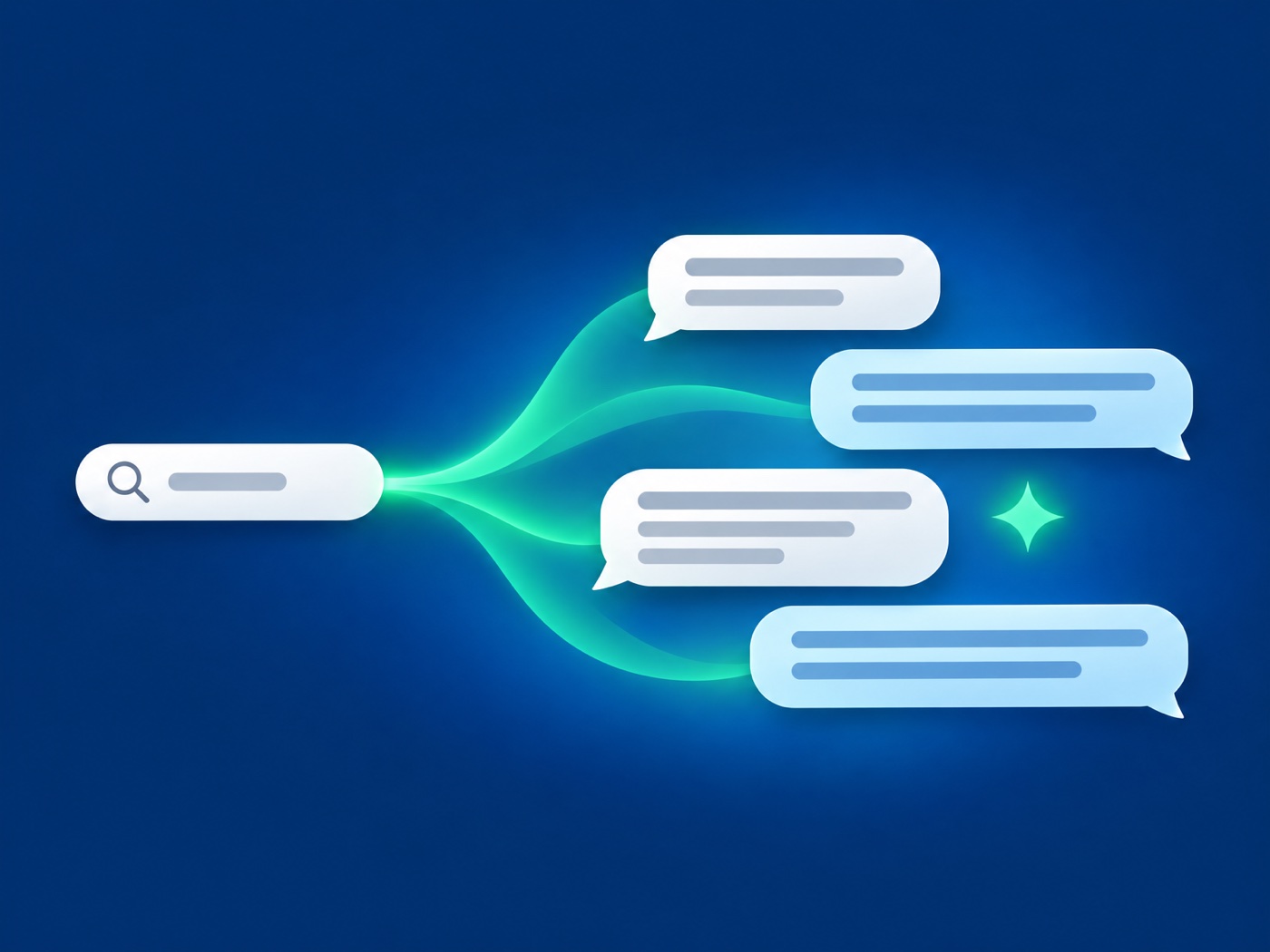
A whole category has grown up to answer it: generative engine optimization, or GEO. More than 100 AI-visibility tools launched in about 18 months, and nearly all of them work the same way. They use AI to write a list of prompts, fire them at ChatGPT, Gemini and other assistants, and record what comes back.
That's synthetic prompt testing, and it's how nearly every GEO tool measures AI visibility today. It answers one question well. It misses the one that matters most.
How GEO tools measure AI visibility
A GEO tool starts with prompts its own AI or its own team wrote, such as “What's the best cordless vacuum?” or “Which running shoes are best for flat feet?” It sends them to the assistants on a schedule, usually from fresh accounts, and tracks how often your brand appears in the answers and where it ranks.
What it's good for: a repeatable benchmark. If you want to know whether ChatGPT mentions your brand for a fixed set of prompts this month versus last month, synthetic testing will tell you.
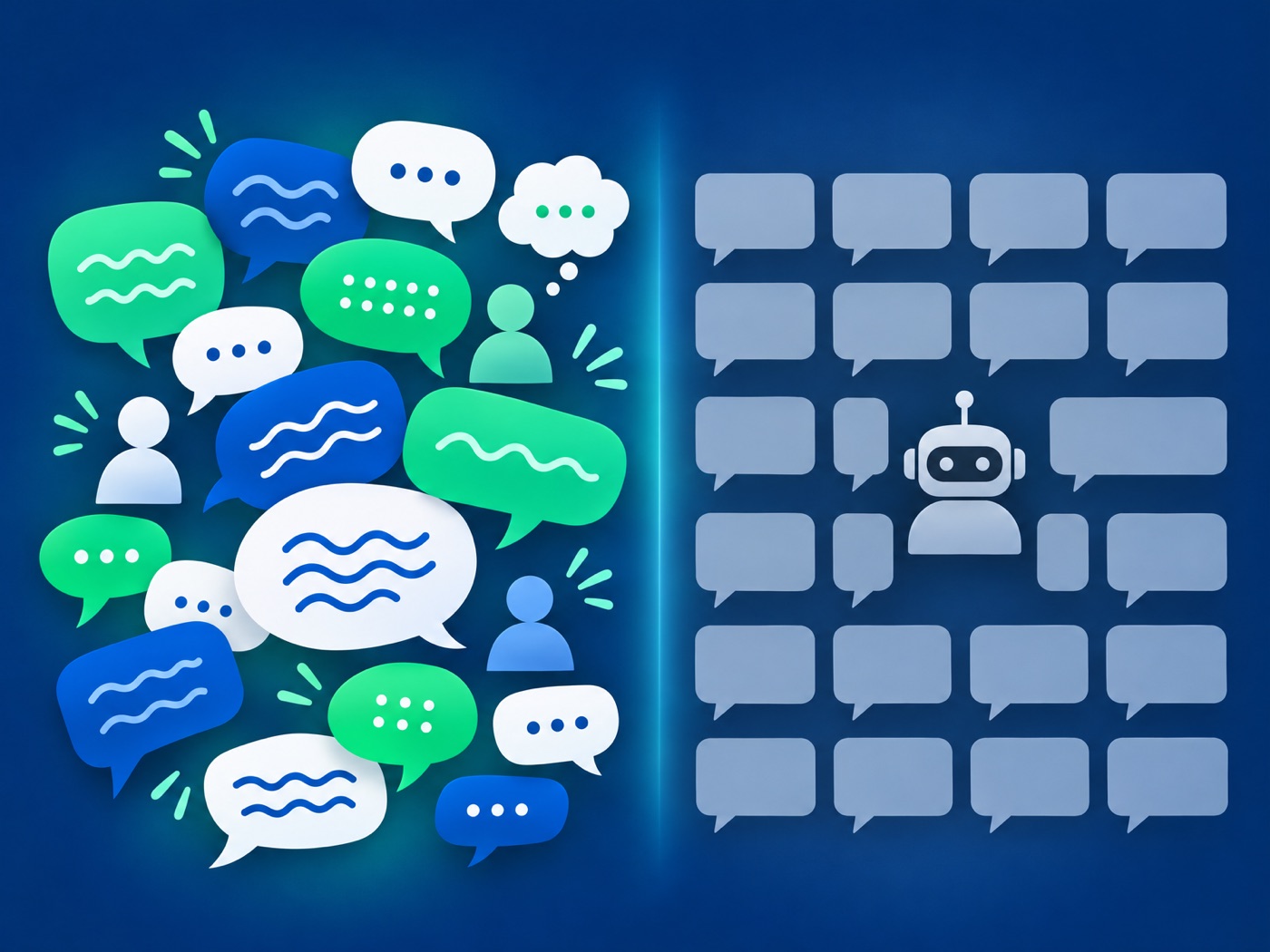
What it can't do: tell you anything about your customers. Every prompt in that dataset was written by a machine or a marketer, not by a consumer. It's AI asking AI.
Five things synthetic testing can't see
1. The questions consumers actually ask
Real prompts don't look like a tracking list. Consumers write the way they talk. They add their budget, their kids' ages, the car they drive and the store they're near.
A scripted prompt list is a guess at those questions. You can't know what's missing from it, because the questions you didn't think to write are exactly the ones it never asks.
2. The full conversation
Rarely does a consumer type one prompt and stop. They read the AI's answer, react to it and push further: they question a recommendation, add a detail they left out, ask for something cheaper or ask where to buy it. Much of the real context lives in that back-and-forth, in how the person responds to what the AI said and where they take the discovery next.
A synthetic test sends one scripted prompt and records one answer. It never sees the second question, because there's no person there to ask it.
3. Who is asking
A synthetic prompt has no person behind it. No age, no income, no household, no history with your brand. So even a perfect answer tells you nothing about which consumers are hearing it.
Real conversation data is tied to a verified consumer, so you can see that a question is coming mostly from parents of young children, or from people who already buy a competitor.
4. What happens next
This is the biggest gap. A synthetic test ends when the AI answers. A real consumer's journey doesn't.
After the conversation, they visit a store, open an app, browse a retailer's site or buy something. Synthetic testing can't follow them there, because there's no one to follow. When conversations are connected to the same consumer's behavior, you can see whether the brand AI recommended is the brand they bought. We call that view From ChatGPT to Checkout.
5. The answer a real person gets
AI assistants increasingly tailor answers to the person asking, using their past conversations and context. A clean test account gets a generic answer. Your customer, with their own history, may get a different one. Synthetic testing measures the generic answer.
What real conversation data looks like
MFour's LLM conversation data comes from consumers in the largest first-party panel in the U.S. who choose to connect their ChatGPT, Gemini and Google AI Mode accounts and are fairly compensated for their data. Nothing is scraped, and 2.8 million consumer conversations come in every 30 days.
Full conversations: what consumers typed and what the AI answered, captured at the account level across mobile, desktop and any OS.
Privacy built in: personal information is stripped and identities are tokenized before anything is analyzed or delivered.
Connected: every conversation joins to verified demographics and to the same consumer's downstream behavior, like store visits, app usage and web browsing, on an anonymous PANELIST_ID.
That's the difference between knowing what AI says to a script and knowing what your customers asked, who they are and what they did next.
Brian Morin, CRO, MFour
Use the right tool for the question
Synthetic testing and real conversation data answer different questions, and a brand can use both:
“Does AI mention my brand for these prompts?” A GEO tool's synthetic benchmark can track that.
“What are real consumers asking AI about my category, who are they, and what do they buy afterward?” Only data from real, consented conversations can answer that.
The mistake is treating the first as an answer to the second. It's the same trap as replacing real respondents with synthetic ones, which we wrote about in Does Validated Consumer Data Outperform Synthetic Shortcuts?
The bottom line
Synthetic prompt testing shows you what AI says in a vacuum. Your customers don't live in one. To understand the conversations that are shaping their choices, start with the conversations they actually had.
To license the dataset itself, explore LLM conversation data. For instant answers, ask DANI.
Verifying your email…
Generate a Free Report to See What's Inside
Not simulated queries. Real prompts typed by opt-in consumers, and the answers ChatGPT, Gemini and Google AI Mode gave them.